
Training Completed: One Step Closer to the Launch of a Game-Changing Location System

- June 3, 2019
- 4 Min Read
Project Lifesaver has always been very open about its practice to continuously advance the technologies and equipment that are utilized throughout our program. To me, that is one of the most important aspects of our organization because remaining comfortable in our practices limits our ability to achieve our mission and safeguard all the individuals we serve.
For that exact reason, I refuse to allow our organization to become complacent.
Approximately a year ago, we were introduced to a new prototype by Loen Engineering, a company we have worked closely with for many years as we have continued to make advancements. At the time, the device had limited functionalities and was far from a final product, but I saw tremendous potential.
Needless to say, I was intrigued and hopeful for the future of Project Lifesaver.
Two weeks ago, Chief Ballance and I had the opportunity to train with this new equipment and we were surprised by what we experienced. I ended the week with even more hope for the future of this program, because like I had suspected from day one, this really will be a game-changer.
Unlike our current equipment, the all-new PLI STAR System has integrated both RF and GPS technologies into its operation… something never seen before in this industry!
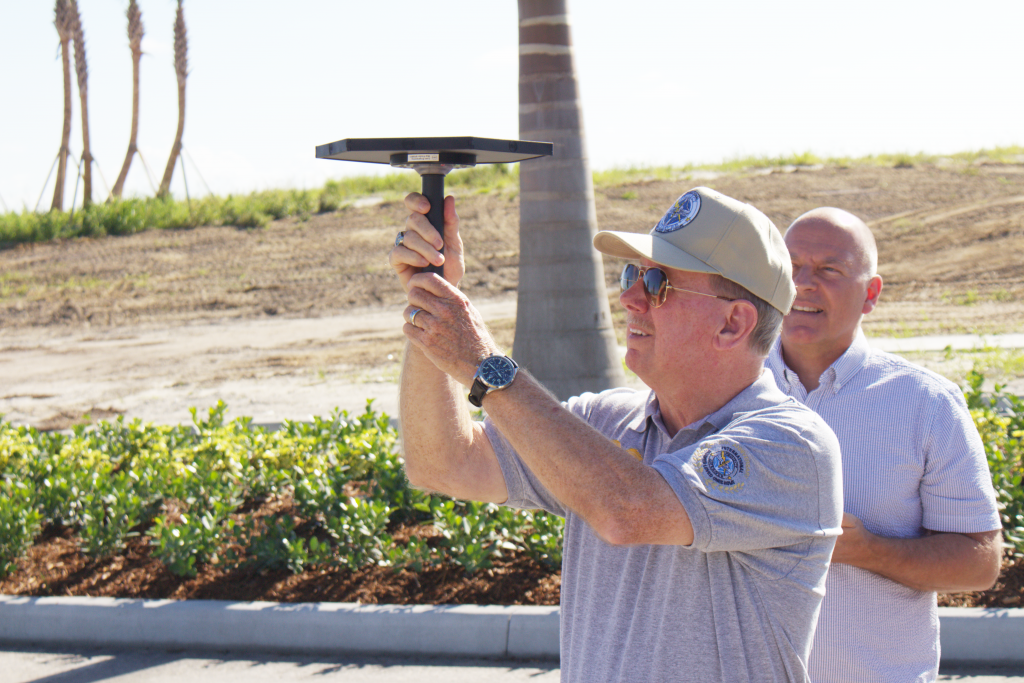 There are four major components of the PLI STAR System:
It was a great, educational week, for sure!
A few things that are important to note, though – to save some nerves of those who think they must jump right on this immediately. While we are very excited to begin offering the PLI STAR System as an option later this summer, it is just that: an option. This will not be an overnight transition, nor will it happen in any short span of time. I would guess it will be more like years before there is significant use of this system throughout our agencies. Given that the PLI STAR System is completely different than our current RF systems, there will be a handful of idiosyncrasies that could make transitioning to this system a bit more difficult than advancements made previously. This includes backward compatibility; unfortunately, something in which this device is not.
What does that mean?
Well, it means that receivers currently in use will not have the capability to track bracelets included in the new system, and this new system will not have the ability to track and locate transmitters currently in use. For existing agencies wishing to opt for this system, it would call for a thoughtful transition.
We will further discuss these topics when we present the new system to attendees at the 20th Anniversary Conference in August – when we are hopeful to have the new system available for a full launch.
Please note that we are still working to determine the protocols for which we will begin offering this as an option to our member agencies, including cost points, but we are very much looking forward to discussing this information at the conference!