Personal Locator Technology

A person with a cognitive impairment who wanders or elopes can go missing in an instant. And when they do, the risks are high, the nature is urgent, and the challenges for all are complex. So the technology used to find them matters.
The ideal solution to this growing health and safety issue pairs the most effective and reliable technology for this specific application with a comprehensive program specially developed to prepare law enforcement, search-and-rescue teams and other first responders for rapid, calculated emergency response to these crisis situations.
As a pioneer in this field of special-needs search and rescue, Project Lifesaver combines personal locator technology with specialized search-and-rescue training and methodology based upon a deep understanding of the unique challenges, behaviors and needs of people with autism, dementia, Down syndrome and other cognitive conditions.
We use radio-frequency (RF) locating technology because decades’ worth of experience and success in our field continue to inform our belief that it is the most reliable and effective assistive technology for locating people who wander, elope or go missing because of cognitive impairments.

The Role of Technology
The use of locating technology as an essential aid is an important part of the solution to this complex demand. Unfortunately, misperceptions abound among the people who most need the facts. Here’s a brief overview of three common missing-person locating technology options that people might consider for finding a missing child or adult with a cognitive impairment:
Radio Frequency (RF)
Global positioning system (GPS).
Assisted global positioning system (A-GPS).
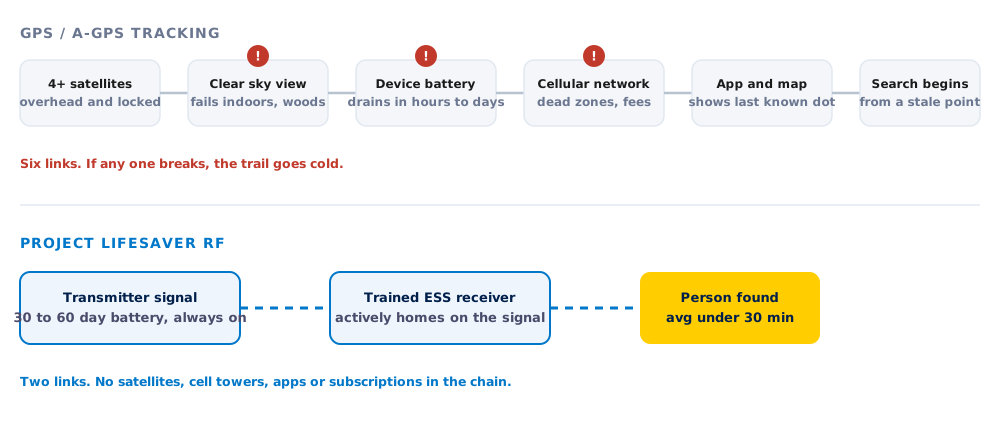
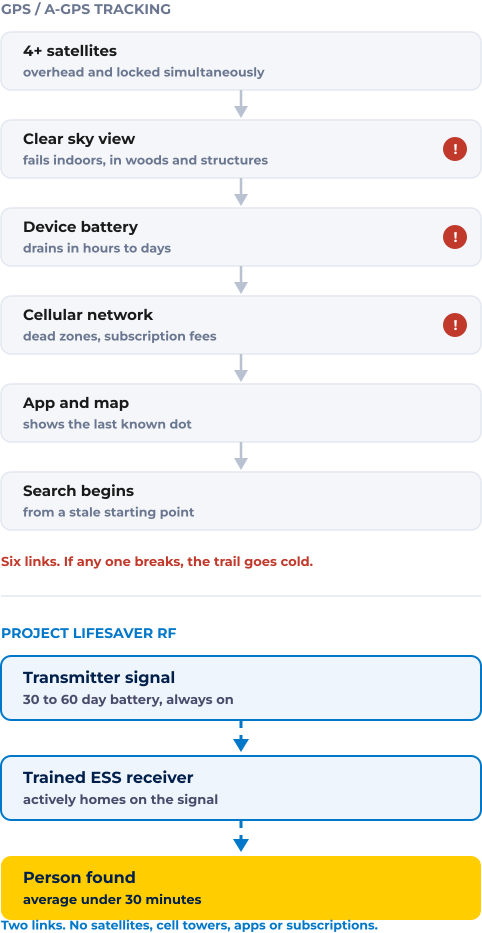
Each system’s technology has its advantages and disadvantages in the search for individuals who have wandered or eloped.
Radio Frequency (RF) Technology
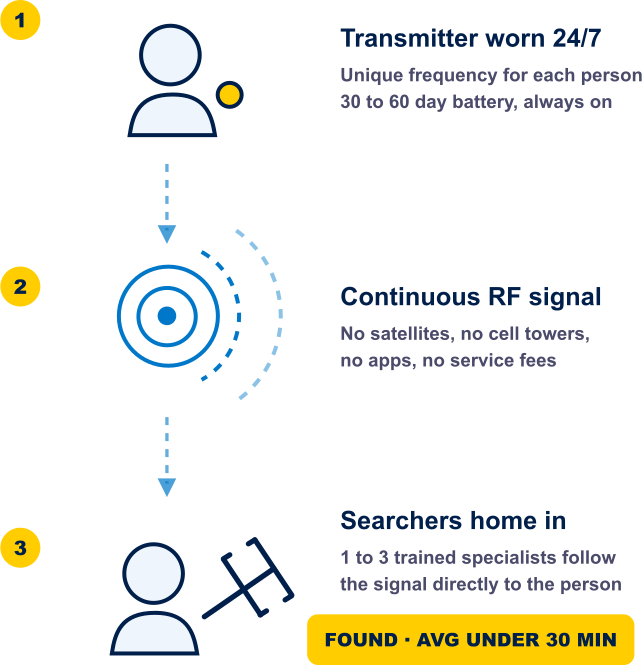
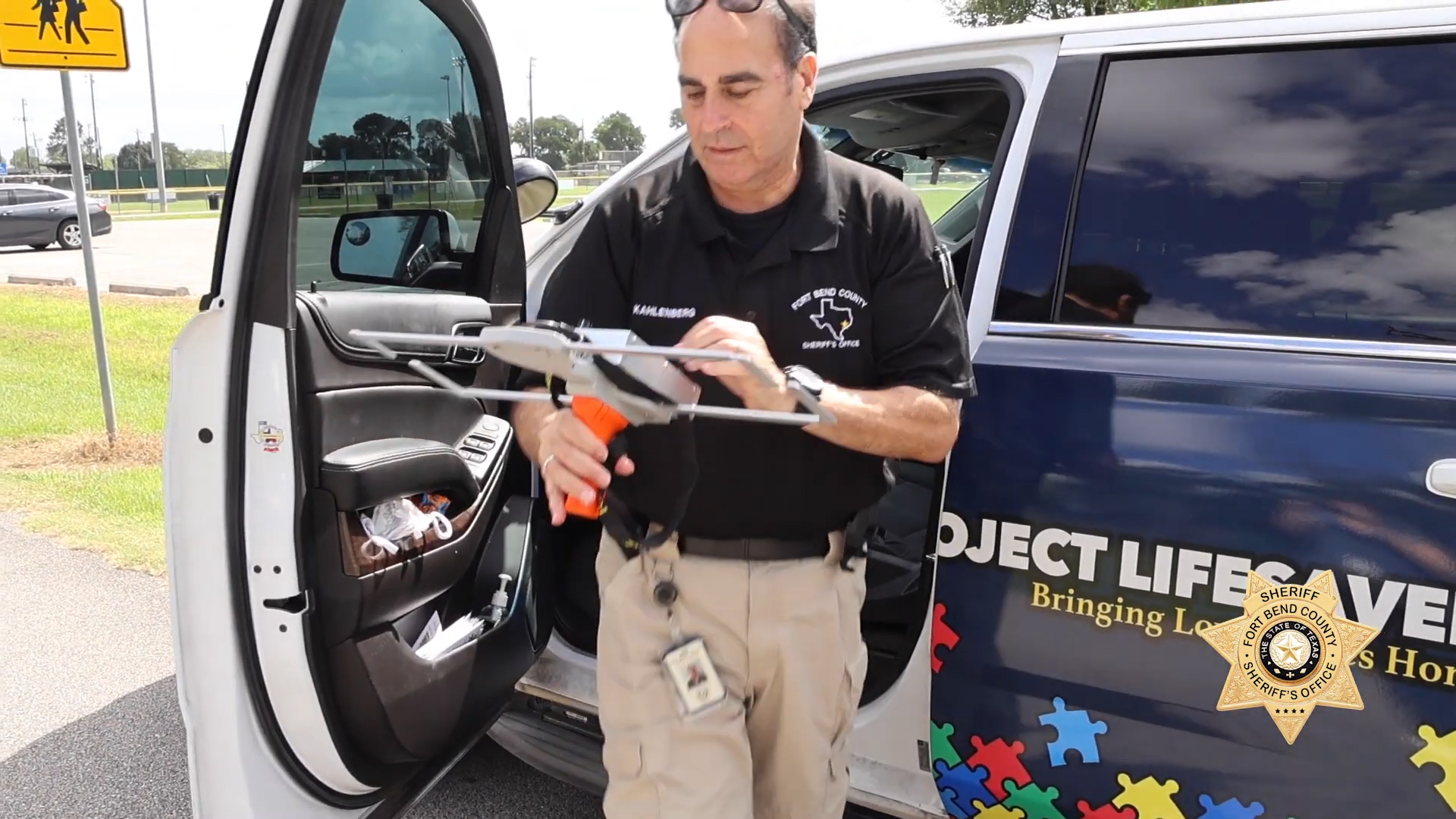
Project Lifesaver uses radio-frequency, or RF, technology. The equipment being deployed in a search consists of an individually programmed radio-frequency transmitter, worn 24/7 by the client, and a special antenna, operated by trained search personnel, to receive the signals emitted by the transmitter.
When a participant is reported missing, Project Lifesaver Certified Electronic Search Specialists (ESSes) tune their receivers into the radio frequency assigned to the individual’s transmitter to track and home in precisely on the missing person’s location. Typically this is accomplished by one to three (1 – 3) ESSes and within an average of 30 minutes.
Major advantages to radio frequency applied to protecting and locating people with autism, Alzheimer’s disease and other cognitive conditions include:
Radio Frequency (RF) Technology
Benefits of RF Technology
The most notable limitation is signal range, which can be greatly expanded as a result of proper training and methodology.
Global Positioning System (GPS) Technology
The U.S. GPS Standard Positioning Service (SPS) is government-owned and consists of space-based positioning, navigation, and timing (PNT) signals freely accessible to users for civil and other purposes. GPS relies on signals sent between the user’s device and a constellation of satellites coordinating to send data back to the device in a sort of “triangulation” manner (although GPS requires signals from a minimum of four satellites simultaneously for accuracy).
The primary advantage of GPS is that for years, according to GPS.gov’s
Global Positioning System (GPS) Technology
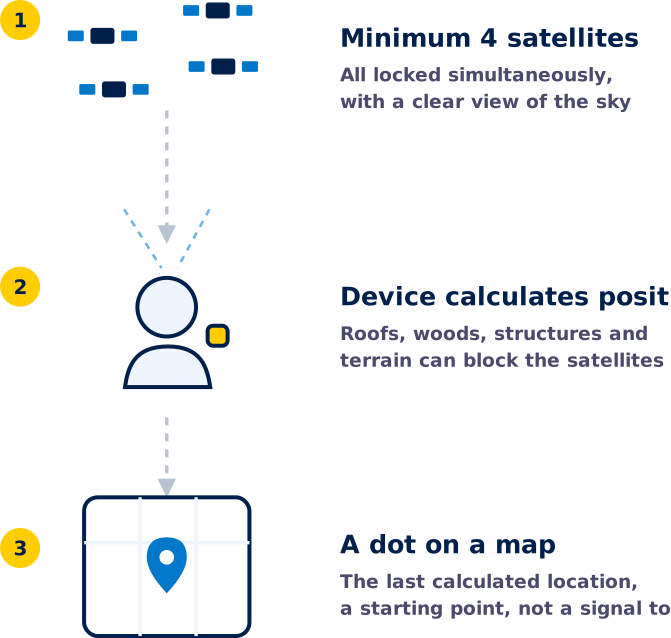
well-designed GPS receivers have been achieving horizontal accuracy of 3 meters or better and vertical accuracy of 5 meters or better 95 percent of the time.
For many everyday applications, GPS is an excellent solution. And in a perfect world, it would even prevent the need for a trained professional search team to get involved in locating a missing vulnerable person.
But it doesn’t.
The list of disadvantages of using GPS includes relatively rapid battery drain due to a high demand for power and general unreliability. For example, the receiver needs a clear path to the satellites to accurately process the signals. Environmental shielding can impact that accuracy and interrupt tracking. Therefore, when using a GPS tracking device, it is often difficult to detect a wanderer who is indoors, underground, surrounded by dense foliage, woods or even crops, or inside or under certain types of structures.
If using a standalone GPS system, the time to establish the initial location is longer than when using an assisted global positioning, or A-GPS, system.
How A-GPS works
Assisted GPS can enhance standalone GPS via assistance from a cellular/data network that it depends on for additional information. That extra data can support increased speed in initially establishing a device’s location and also enhance GPS performance in certain challenging environments and situations, as in limited visibility to/from satellites. A-GPS is what many mobile devices use; it’s especially helpful for navigation. Potential advantages to A-GPS applied to protecting and locating people with cognitive conditions include:
It’s important to note that in areas with poor or no cellular coverage and environments that prevent visibility to/from a minimum of two space satellites, A-GPS does not offer supplemental value to GPS for the intended purpose. Furthermore, A-GPS requires connectivity to a data network, for which monthly fees may also apply.
A-GPS is an improvement over standalone GPS for many consumer applications. But it still relies on both GPS and cellular service. So for Project Lifesaver’s purpose, adding cellular assistance does not eliminate the underlying dependencies that can become problematic during a difficult search.
How A-GPS works
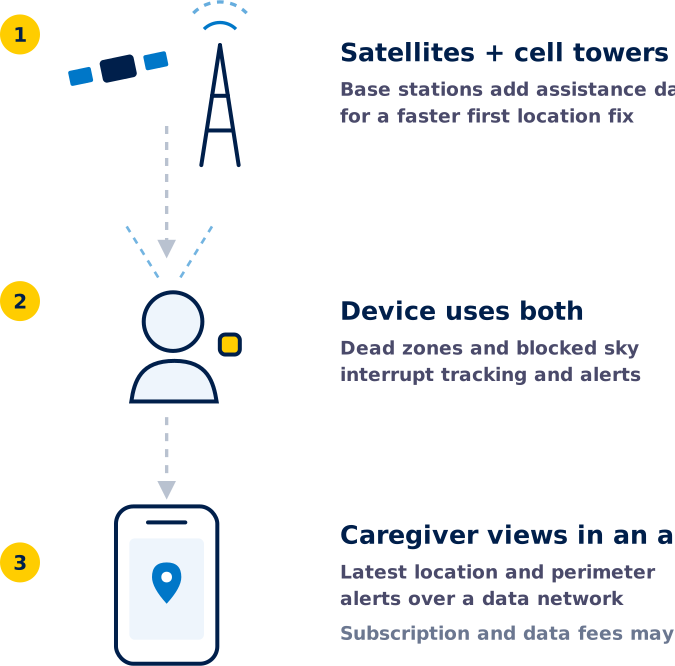
A-GPS enhances GPS speed and reliability, helping caregivers monitor loved ones, but still depends on cellular coverage and satellite visibility during critical searches.
Benefits of GPS
PLI Technology Statement
Every locating technology has strengths and limitations, and no single one is ideal for every situation. So it’s important to base this critical decision on facts, not on fear or peer pressure. Do the research, ask the appropriate questions, and understand the strengths, capabilities and vulnerabilities of each technology for the intended purpose. For Project Lifesaver, those questions and comparisons lead us to radio frequency.
We choose RF because our objective is to provide trained search personnel with a reliable signal that they can quickly and accurately detect, track and home in on precisely, regardless of what challenges any number of cell towers, space-based satellites or other networks may have at any given time and place.
We believe that as part of the comprehensive Project Lifesaver program, RF technology’s combination of signal characteristics, independence from GPS satellites and cellular networks, active homing capability, long battery life and suitability for ground and airborne searches makes it particularly well suited to the specific challenge we are addressing: finding a missing person with a cognitive impairment quickly and safely.
That is the standard against which we evaluate technology. And this is why Project Lifesaver continues to research, test and evaluate locating technologies as they evolve.
Finally, Project Lifesaver is a program, not a product. And having a growing international network of members running the same program with the same technology means that when families move or travel city to city or state to state, Project Lifesaver member agencies are in a position to support one another during missing-person events and search-and-rescue operations.
Technology continues to evolve, and so does Project Lifesaver. We will continue evaluating new technologies against the same fundamental question: When a vulnerable person goes missing, will this technology help trained searchers find them?